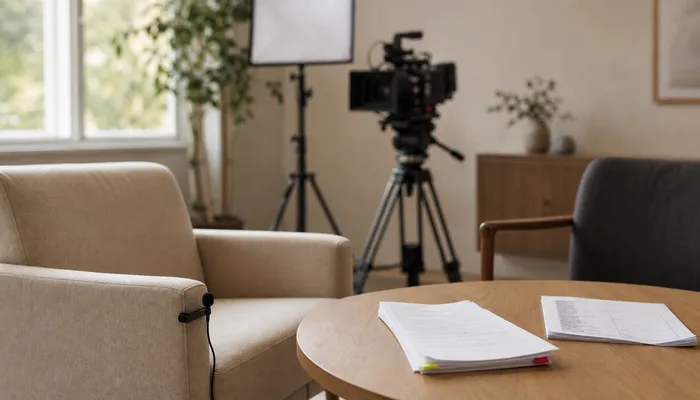
Two owners can leave the same meeting agreeing on the same video and still picture two completely different finished products. One is imagining a warm, spoken-from-the-heart piece in Spanish; the other is imagining the English cut with subtitles bolted on at the end. The gap is rarely creative. It is operational, and it tends to surface months later, when someone asks who approved the Spanish script.
Bilingual video shoot planning exists to close that gap before a camera is set up. If a business serving Joliet-area customers works with both English- and Spanish-speaking buyers, the language question is not a translation task added after production wraps. It is a set of decisions about audience, speakers, schedule and approvals that cost far less to make in a brief than in an edit bay. What follows is the order in which those decisions actually arrive, and what each one changes downstream.
Start With Who the Video Is Actually For
Most teams decide the language first and the audience second, which is backwards. Audience determines whether you are producing one asset or two, and it determines what counts as proof in each version.
There is a real difference between reaching bilingual households and reaching two separate buyer groups. A bilingual household may watch either version and be satisfied with subtitles. Two separate buyer groups usually are not: a Spanish-dominant customer evaluating a clinic, a contractor or a restaurant wants to hear the offer explained in the language they make decisions in, not read it. The same footage can serve both situations, but the edit, the on-screen text and the call to action rarely can.
Before anything is scheduled, the client should be able to answer one sentence out loud: who is this version for, and what should they do after watching it. If that sentence changes depending on who in the company is talking, the project is not ready for a shoot date — it is ready for a planning conversation. This is also the point where the working relationship matters: it helps to know how Creaxiones plans video and web design work for Joliet businesses before committing to scope.
Three Ways to Produce a Two-Language Project
There is no single correct method. There are three common ones, and each trades effort in a different place.
- One interview, subtitles added in post. The fastest route and the least disruptive to a busy owner’s calendar. It works when the second audience is comfortable reading and when the message is simple. It loses nuance the moment a speaker uses regional vocabulary, humor or a phrase that does not translate cleanly.
- One interview, voiceover or dubbing. Visual continuity is preserved and the second version sounds polished, but the voice on screen and the voice in the ear no longer match, which some audiences notice immediately.
- Two separate takes with two speakers. The most natural result and the one that reads as genuine to both audiences, especially when a staff member or owner speaks Spanish at home. It also costs the most in schedule: two setups, two briefings, two rounds of approval.
The right choice usually follows where the video will run, not what feels cheapest on paper. A vertical clip for social can survive subtitles. A two-minute piece that anchors a service page or plays in a waiting room should probably be performed, not captioned. For a two-language video interview, the deciding question is simple: will this person’s real voice be the thing that earns trust, or is the information enough?
What Changes on the Shoot Day
A non-professional speaker answering questions in their second language needs a different kind of direction than someone answering in their first. Answers come out shorter, pauses land in unexpected places, and the instinct to apologize for imperfect grammar shows up on camera far more often than anyone expects. Briefing should include permission to answer slowly and to restart a thought without embarrassment.
Build a second pass of the same questions into the schedule instead of hoping one take covers both versions. It costs fifteen or twenty minutes and produces far more usable material than trying to stretch a single answer into two languages.
Captions, on-screen text and lower thirds in two languages have to be decided before the edit, not after. Once graphics are built in one language, rebuilding them is real work. The same applies to any signage, product labels or printed materials that might appear in frame — a background poster in English undermines a Spanish-language cut more than most clients anticipate.
Weather and daylight are genuine scheduling variables here. Northern Illinois loses light early for much of the year, and exterior scenes near Joliet, Crest Hill or Lockport that look generous in June need a very different call time in November. Treat this as planning discipline rather than a promise about conditions; the calendar decides what is possible on any given week.
Carrying Both Languages Onto the Website
Video rarely lives alone. It sits on a page, and the page has to match it. Before the edit is locked, decide whether the site gets a second set of pages, a language toggle, or only translated key sections. Each choice has consequences for navigation, search visibility and maintenance, and the approach worth reading in more depth is structuring pages for more than one language.
Spanish-language website content planning should keep three things consistent: the video, the page copy and the contact path. If the video says to call and the Spanish page only offers a form in English, the effort collapses at the last step. Whoever answers the phone or the inbox also matters — a bilingual campaign that lands on a monolingual response is worse than no campaign.
Name the person who approves the Spanish version early, ideally before scripting. That reviewer should be someone who actually speaks the language the customers speak, not whoever is available. Waiting until the final cut to find that reviewer is the single most common cause of delay in two-language projects.
Where the Planning Usually Breaks
Three failures account for most of the rework.
The first is approving the English cut and then treating the Spanish version as a translation job. Translation preserves words; it does not preserve rhythm, emphasis or the reason a sentence was worth saying. The second is shooting once and discovering afterward that the second audience needed different proof points — a different license mentioned, a different location, a different person on camera. The third is leaving the website decision until the edit is locked, which forces the page to accommodate the video instead of the reverse.
All three are avoidable with one conversation held early. None of them require a bigger budget; they require sequencing.
Bringing It Into One Brief
Four inputs turn a vague idea into a scoped plan: the audiences, where each language version will run, who approves each version, and which language leads the message. That is the whole brief. Everything else — crew, schedule, deliverables — follows from it.
If you are still deciding whether the second audience is large enough to justify the work, public data is more useful than assumption. The Census Reporter profile for Joliet and the Census origin dataset behind it show how the city’s language profile is composed, and reading the current figures yourself beats quoting a number someone half-remembers from a meeting. Local context like that is also part of how a Chicago-based team works with Joliet-area businesses across Will County and nearby communities such as Shorewood, Romeoville and Plainfield.
What the day itself involves is easier to picture once the language plan is settled; what an on-location shoot day actually looks like covers the logistics side of that. For the planning side, gather your audiences, your channels, your approvers and your priority language, and share that context through the contact page — a short description of the project is enough to start a real conversation about scope.